

10 Mar Exhibition Catalogue
Curatorial note: Fareha Zeba and Sadya Mizan
Unlearning the Book began as a shared curiosity: what might happen if storytelling, the up-cycling of textile, and the idea of the book were brought together in a single creative process? Rather than treating the book as a fixed object, we approached it as a familiar form that could be gently questioned, unfolded, and reimagined. The project was also inspired by the ancient material histories of books, when stories travelled through palm leaves, cloth, memory, and voice, long before the book became a standardised printed object.
The participating artists come from diverse practices and experiences. Some have long worked with textile, while others encountered the material in this project for the first time. Similarly, some artists embraced the idea of “unlearning the book” easily, while others found it challenging. This diversity of responses is not a limitation but an essential part of the process. Unlearning cannot happen in a single moment; it is gradual, layered, and often incomplete. The intention here is not to replace the book, but to expand the ways we understand and engage with it.
Our curatorial collaboration also reflects a generational exchange and friendship to ensure a place of shared interest in creating platform for experimentation, dialogue, and collective learning and unlearning. As curators we were unlearning many things ourselves and learning from each other too.
Through mutual exchange and material exploration, artists were encouraged to rethink not only the form of the book, but also the possibilities of textile up-cycling, storytelling, and creative solidarity.
Unlearning the Book is not a conclusion but an invitation imagine, question, and continue the process of learning together, story telling and questioning the obvious to explore the unknown.
Participating Artists
Abrar Shadman
An Armour of Threads
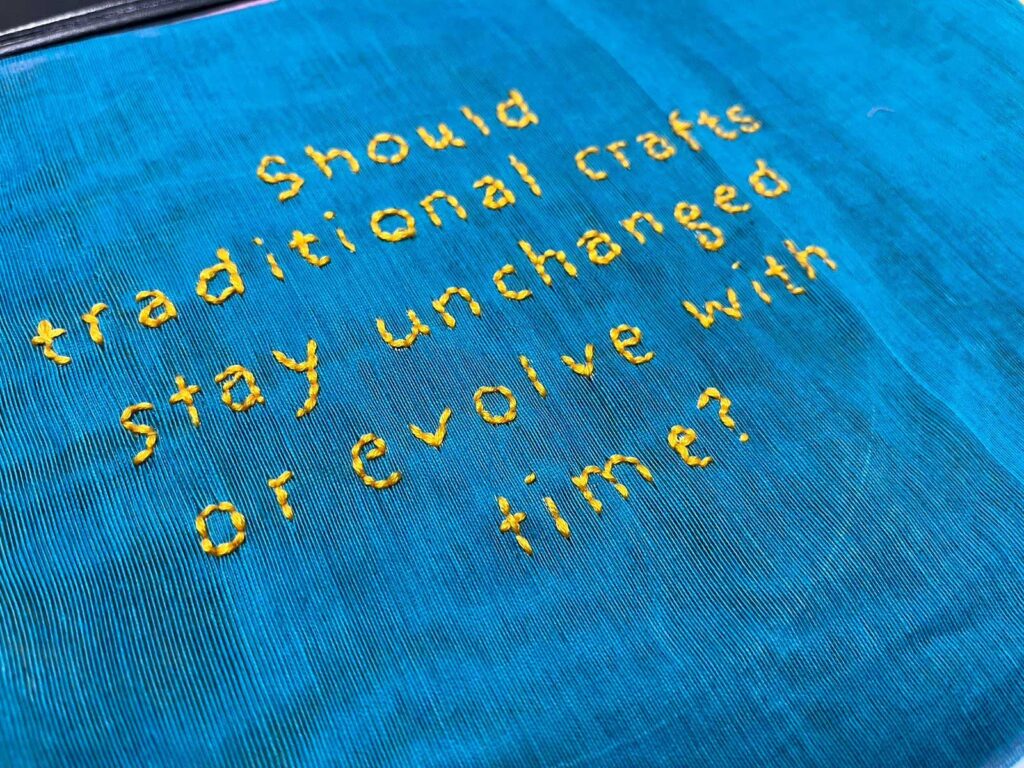
Jamdani is more than a textile; it is a language of threads carrying centuries of memory, labour, and stories. Each motif holds the rhythm of the loom and the quiet persistence of the hands that weave it. Yet the question remains—how do we see Jamdani today? Is it only a tradition to be carefully preserved, or can it also be a space where new ideas and forms emerge?
This work is constructed by weaving together leftover Jamdani sarees into an armour-like form. The shape is inspired by a childhood tank top I often wore, a garment that holds personal memories of comfort and familiarity. By reconstructing this shape through weaving, the piece connects personal history with the larger history of Jamdani.
The armour becomes both a protection and a question. Does Jamdani act as an armour that safeguards our heritage, history, and craftsmanship? Or can it also protect the future of the craft by allowing it to transform and exist in contemporary forms?
Through this piece I invite a conversation—one that moves between past and present, between learning and unlearning. Like an old Jamdani saree or a childhood garment that carries traces of the body and time, the work holds fragments of stories within its threads.
But at the heart of Jamdani are the weavers—their knowledge, patience, and lives intertwined with the loom. Any future imagination of Jamdani must also hold space for them. If Jamdani is an armour, then it must not only protect tradition but also the hands that keep the loom alive, allowing their craft, dignity, and stories to continue weaving into the future.
Ahsana Angona and Ayomoy Aronno
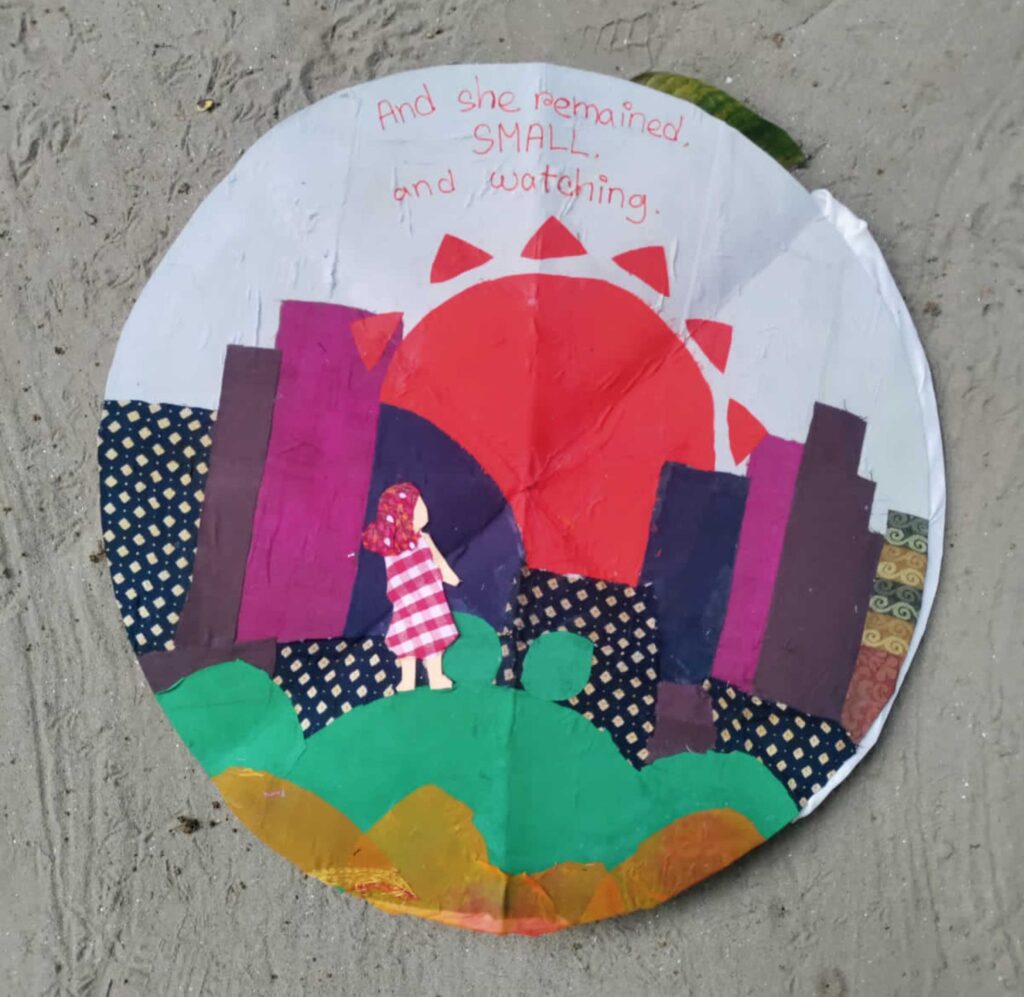
Little Steps: It is a conceptual art project inspired by the poetic narrative The Cocoon Who Woke Too Late. The work reflects on the fragile relationship between humans and the natural world through the perspective of a small awakened being who emerges after a thousand years of sleep. While she expected transformation and flight, she instead finds herself human—tiny and vulnerable in a world that has grown loud, polluted, and overwhelming.
From her small vantage point, everyday objects appear monumental. Grass becomes a forest, and discarded plastic bottles resemble fallen monuments. The air carries the taste of burning, and rivers move slowly under a layer of oil-like scars. Through this altered scale, environmental damage becomes visible in an intimate and unsettling way. The larger humans move quickly around her—building, breaking, and rarely pausing to notice the ground beneath them.
Rather than confronting destruction with force, the small figure responds through quiet acts of care. She gathers threads from the remains of her cocoon and begins to stitch the earth—mending cracks, wrapping fragile surfaces, and whispering forgotten memories of softness, patience, and coexistence. The thread becomes a metaphor for repair, resilience, and the possibility of healing through gentle persistence.
Materially, the project incorporate textiles, recycled materials, and layered visual storytelling. These elements echo the cocoon as a protective structure while also referencing cycles of transformation and repair.
Little Steps invites viewers to reconsider scale, responsibility, and attention. It asks whether meaningful change might begin not with grand gestures, but with small, careful actions—moments of noticing, remembering, and quietly repairing the world we inhabit.
Alia Kamal
The Story of Sharkar:
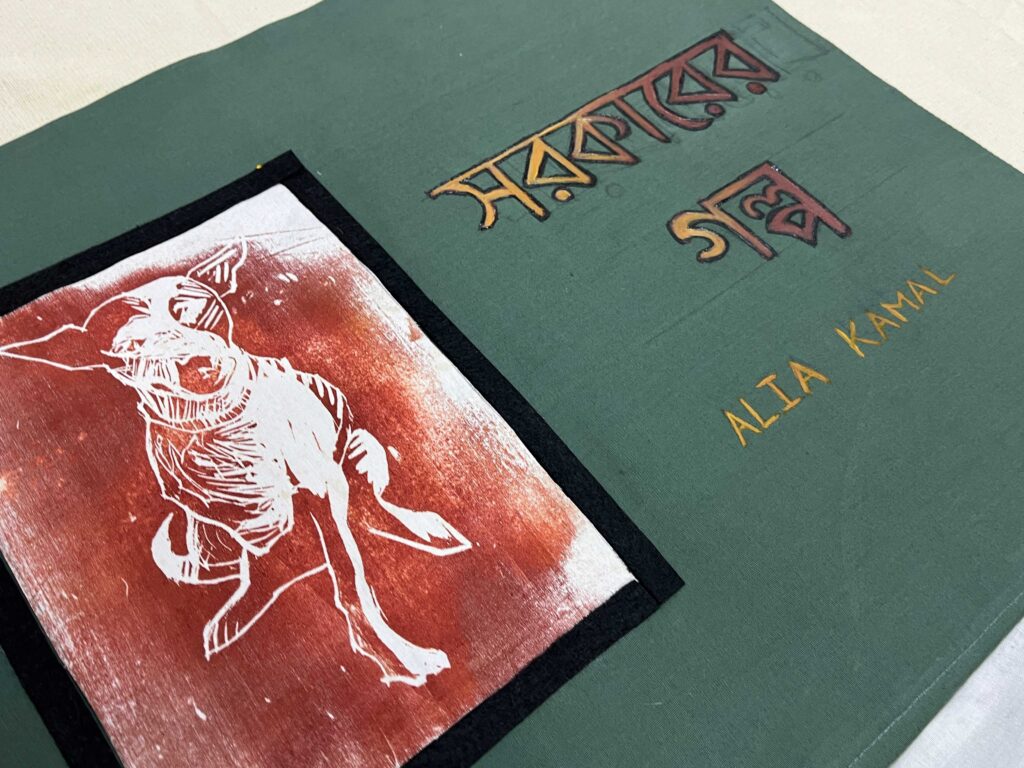
In Bangladesh, where the stray dog is omnipresent, we might ignore them, or toss a biscuit their way and keep walking. But what if we stopped? What if we allowed ourselves to pause—to empathize, and to engage?
This is the story of one such dog, “Shorkar,” who transformed many lives along the way. It unfolds through the voices of three of his human friends and the days they shared with him.
Esha Ahmed
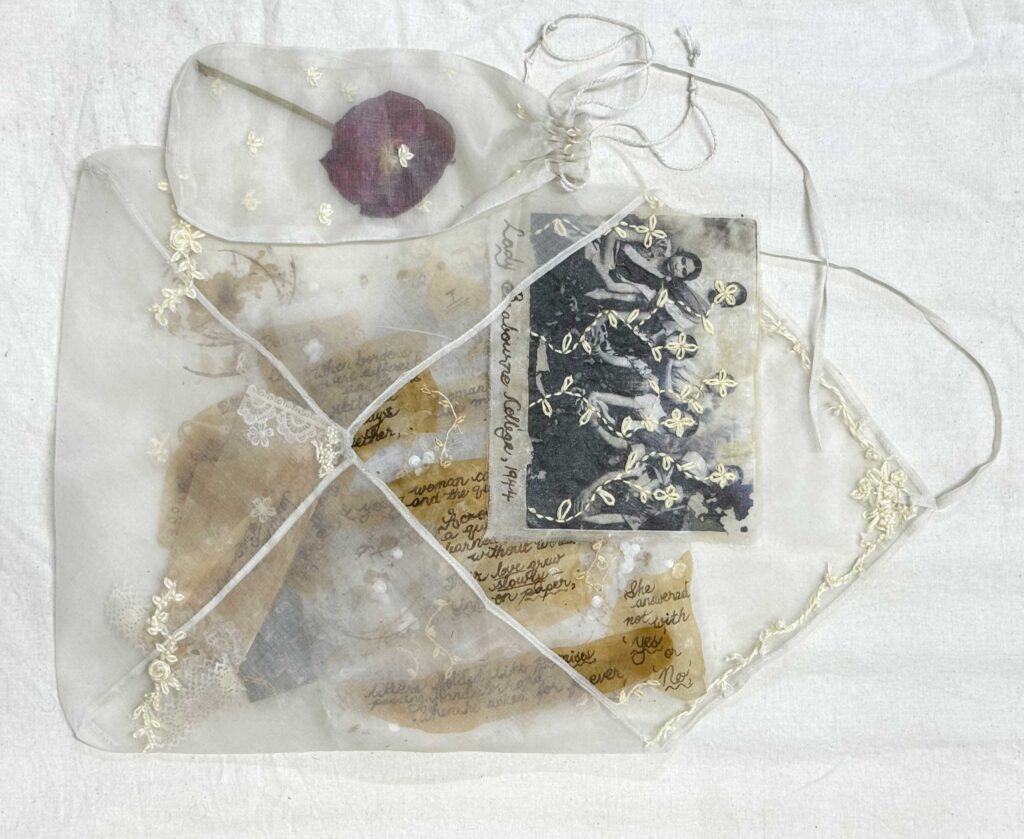
Value Folded in Memory :
My story is rooted in one of the values my grandmother held—one that reached me through letters written in the 1940s. Though we belonged to different generations, these preserved letters became a bridge through which I came to know her. In a present time where chaos often feels ordinary, I return to her words in search of tranquility, reflection, and quiet strength.
This body of work unfolds as a form of storytelling through letters. Much like opening an envelope and discovering what lies within, each layer of the work reveals fragments of her life, thoughts, and spirit. Through these letters I slowly unfolded her presence, building an understanding of the woman she was and the values she lived by.
The process of creating this work mirrors the act of uncovering memory. Layers of material, texture, and narrative come together to evoke the intimacy of preserved correspondence, turning each piece into a visual envelope holding traces of time and emotion. Bangladesh’s heritage textile, muslin, plays a central role in the work. Its delicacy and historical significance reflect both fragility and endurance—qualities that echo the preserved letters themselves. Through muslin and mixed media, I explore memory, lineage, and the quiet transmission of values across generations.
Farhana Ferdausi
Bloom3, Mariam Flower / Buti Historical–Mythical Reference
An entity is growing inside you, which you are feeling; every moment its presence reminds you that you are not alone. You are not only protecting yourself—you are nurturing another life. This inner feeling cannot fully be expressed through words. It is a subtle and sacred touch, a divine transformation through which a woman slowly becomes a mother.
Just as a fetus rest quietly in the mother’s womb, waiting for the moment to meet the light and air of the earth, the journey of arrival is not easy. Yet, despite the challenges, women across generations have walked this path with courage and patience. The long journey of pregnancy—around thirty-seven weeks—carries both physical strain and emotional strength, and throughout history women have sought gentle ways to ease this journey.
In many parts of South Asia and the Middle East, a small desert plant known as the Mariam flower or Mariam Buti holds a special place in cultural belief and traditional practice. According to ancient folklore and Islamic legend, the plant is connected to Maryam (Mary), the mother of Prophet Isa (Jesus). It is believed that during the difficult moments of childbirth, Maryam found comfort and relief with the help of this desert plant. Because of this association, the dried Mariam flower became a symbol of safe motherhood and divine protection.
The flower itself has a remarkable natural quality. When it is dry, it appears closed and lifeless, but when placed in water it slowly opens and spreads, symbolizing birth, renewal, and the unfolding of life. For generations many families have kept the Mariam flower in water during childbirth, believing that as the flower gently opens, it spiritually reflects the easing of the mother’s labor.
Thus, the Mariam flower stands not only as a botanical wonder but also as a cultural metaphor for motherhood. Like the flower that awakens in water, the hidden life inside the womb gradually unfolds into the world. It represents patience, faith, and the quiet strength of women—transforming the pain of birth into the miracle of new life.
Fouzia Mahin Chowdhury
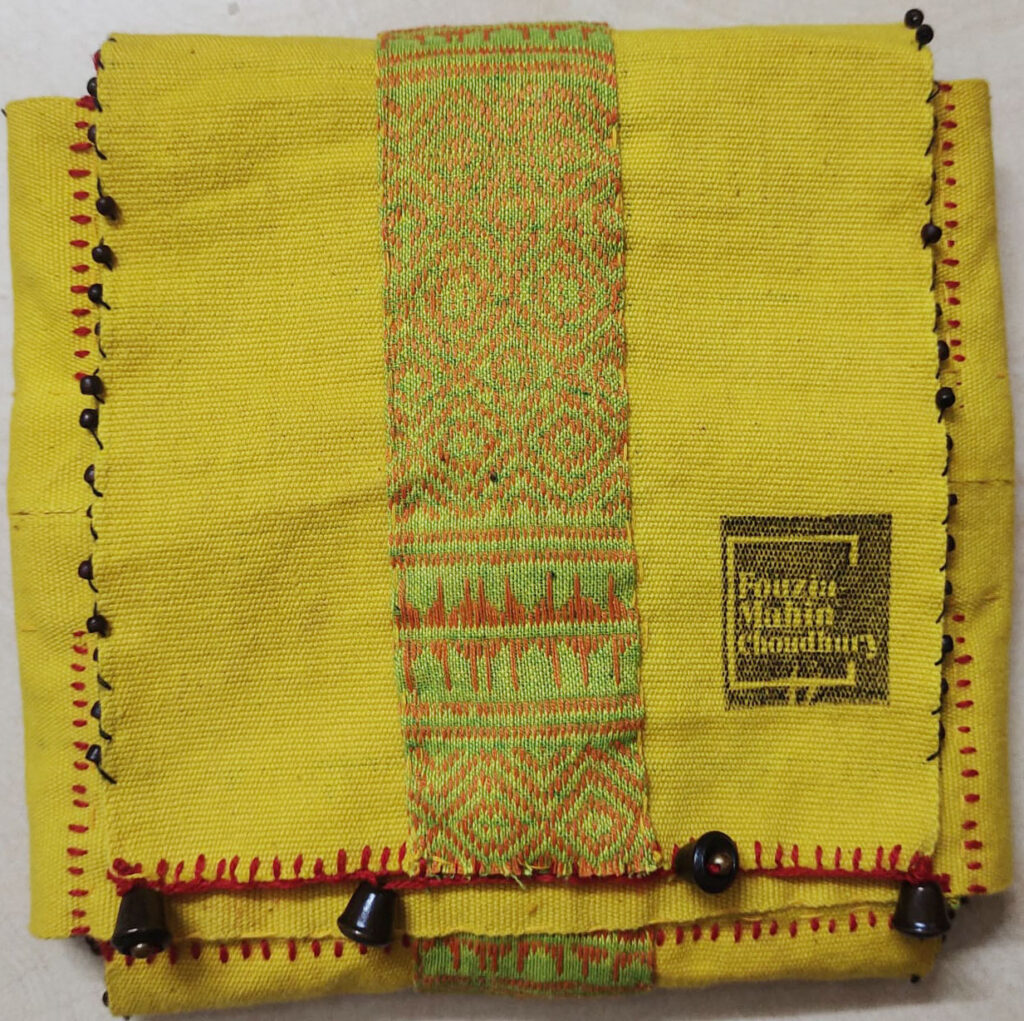
My work is a short Puthi titled “Poa-Baro.” “Poa-Baro” is a well-known Bengali proverb that is similar to the expression “hitting a jackpot” in English. While we all understand its meaning, very few know its origins. The literal translation of ‘poa-baro’ is ‘thirteen.’ Unlike in the West, where thirteen is often considered an unlucky number, in ancient Southeast Asia, it was viewed quite differently.
In the ancient gambling board game Pasha, thirteen represented the highest possible score. Achieving this score required exceptional luck, as it consisted of rolling 6+6+1 with three dice in a single turn. This score once brought fortune to Shakuni in the Mahabharata, where he won everything Yudhisthir, the eldest Pandav, possessed, including his kingdom, his own freedom, his brothers, and his wife, Draupadi. Although this resulted in the shameful episode of Draupadi’s humiliation and disrespect, I find it troubling that people choose to remember it as a stroke of luck.
However, my poem “Poa-Baro” does not convey a moral lesson. I do not aim to glorify Shakuni or the misfortunes of the Pandavs; rather, it simply outlines the game’s rules, as inscribed on a Pasha board, with a few names mentioned.
Hridita Anisha and Faiza Fairooz
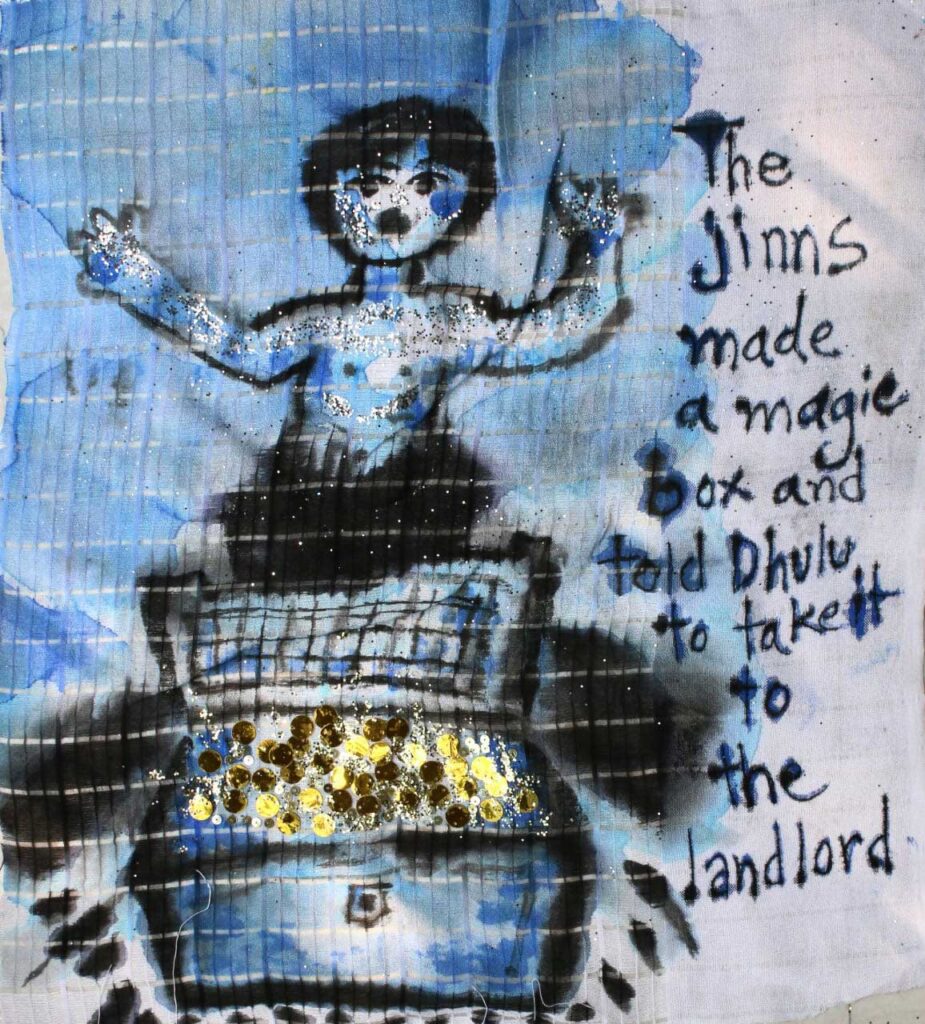
Our book is inspired by a story that I (Faiza) heard from my aunts in my village home. It merely orally survives within some of my family members and a few old villagers. At its center is Dhulu, the diver is said to be my great-great-great grandfather and believed to possess special or supernatural powers with water.
Using fragments of this remembered tale as a starting point, Hridita and I reworked the narrative and developed it into a contemporary folk story while retaining the spirit of the original memory.
We made this book by upcycling one of our sarees that was worn and also used in performance art. Later, it was painted with Chinese ink and glitter on it to create a whimsical, fairytale-like atmosphere while also reflecting the delicate nature of memory.
The story revolves around innocence, curiosity, and greed, and the drawings adopt a playful, childlike quality that echoes the tone of oral storytelling. Through fabric and image, the work carries a fragile, localized story into a new narrative form.
Farah Naz Moon
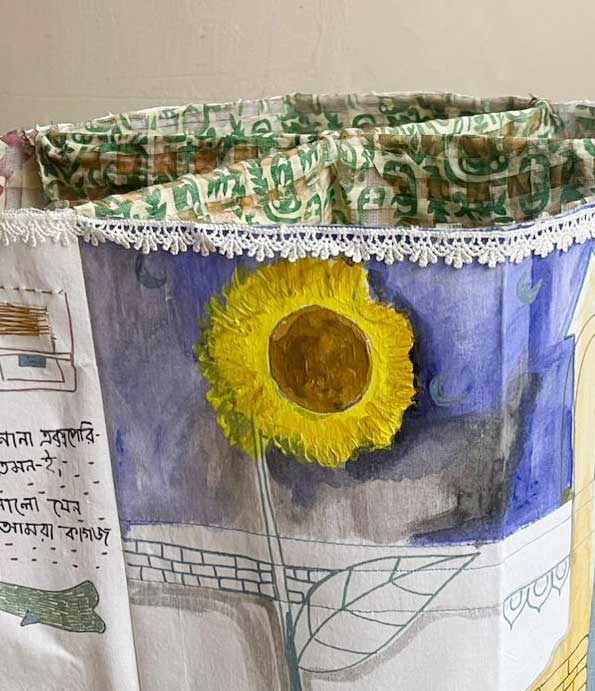
This project connects with my hometown chattogram and the older part of Dhaka through memories. The artwork uses stitching, drawings, and textile layers to show how homes preserve stories of people and generations. By combining architectural elements, maps, and personal objects, the work explores how memory, family, and place are deeply connected.
Jayatu Chakma
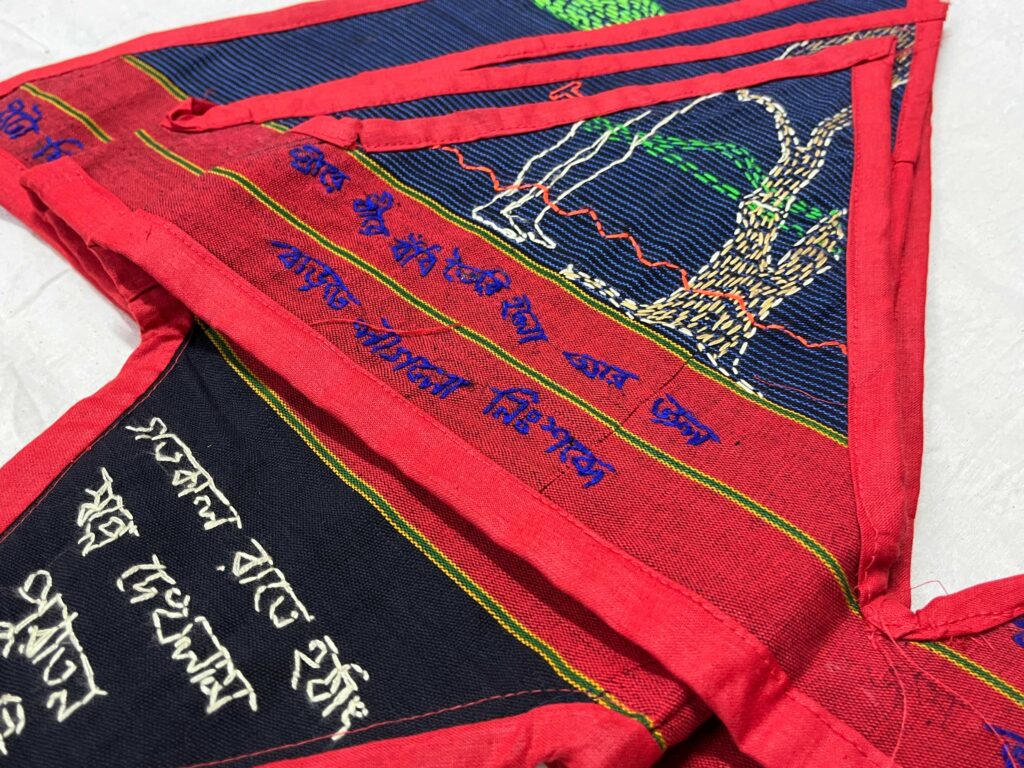
Great Migration (Bor- porong, মহাপ্রস্থান)
This work reflects on memories of life before and after the construction of the Kaptai Dam on the Karnaphuli River. Through stitched drawings arranged in a book-like form, it shares a quiet story of villages, homes, and lived experiences that now lie beneath the waters of Kaptai Lake. Built in the 1960s in Rangamati, the dam flooded vast areas, displacing entire communities and submerging whole villages.
The work incorporates Thami, a traditional woven garment worn by Indigenous communities of the Chittagong Hill Tracts, grounding the narrative in the material culture of the region and its people. The artist, Jayatu Chakma, who belongs to the Chakma community, also proudly incorporates his own language into parts of the work, adding another layer of cultural presence and identity.
It explores how, even as landscapes disappear, memory continues to surface—held within images, threads, and storytelling. Through the use of textile and narrative fragments, the piece creates a space where histories of place, loss, and lived experience are preserved and carried forward.
Jinnatun jannat
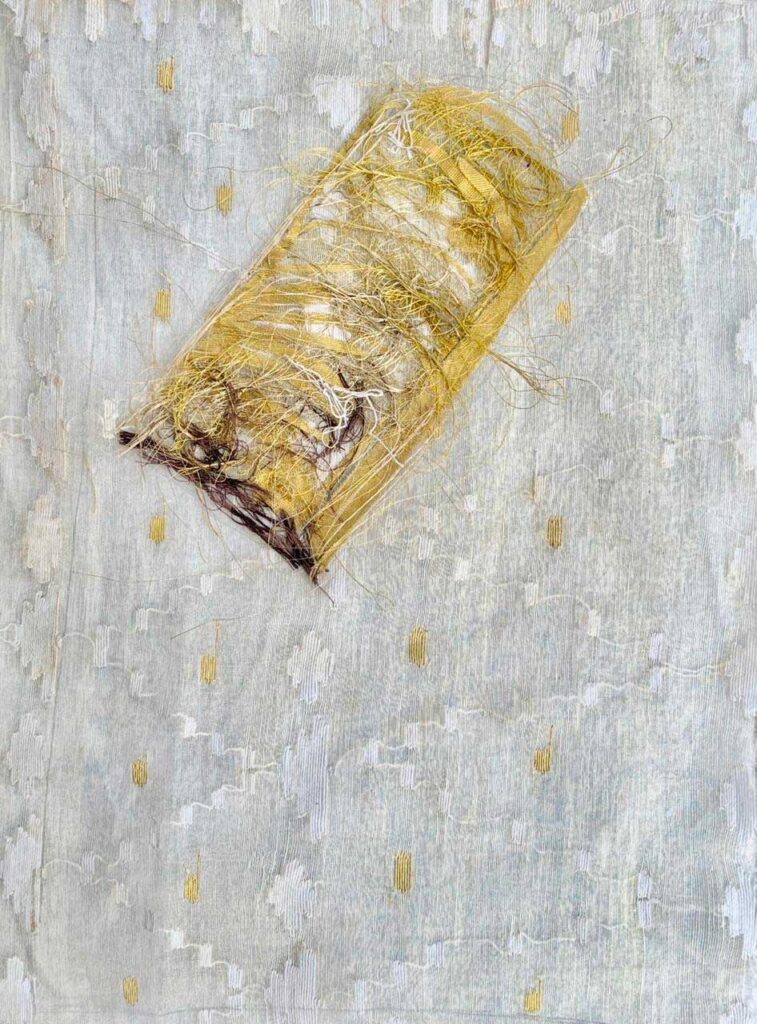
The drops of grief
Grief settles here like drops on cloth. Through marks and stitches, the artist holds fragments of a presence. Made out of love for her father (Ba), the work reflects her experience of grief after loosing her father, through fabric, stitching, and delicate marks, where absence quietly takes on the form of presence.
Kazmin Samia
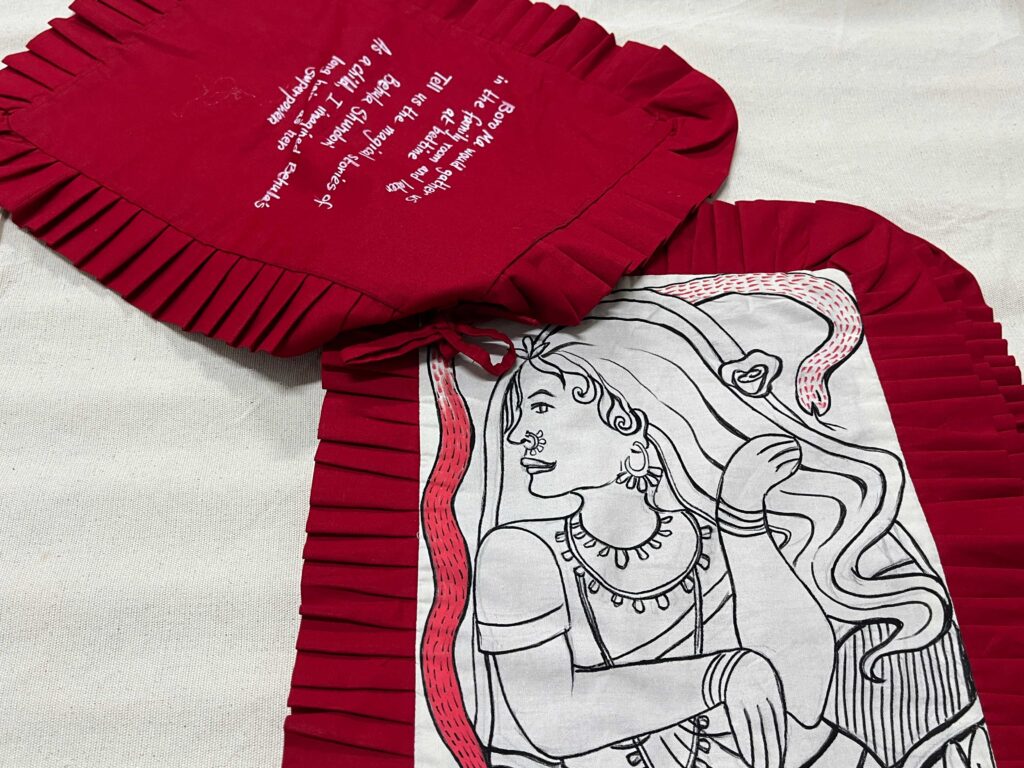
Boro Ma and Behula: Reminiscing Whispered Inheritance
As a child, the artist first encountered the story of Behula not through books, but through the intimate ritual of bedtime storytelling. Her great-grandmother (Boro Ma) from Sylhet (North east of Bangladesh) would gather the children and recount the tale of a fearless woman who journeyed across rivers and storms, carrying her husband Lakhindar after he was bitten by a serpent. (Behula is a central figure in Bengali folklore, known for her devotion and resilience, who journeys to the divine realm to restore her husband’s life.) Boro Ma’s voice moved gently through the room, transforming myth into something deeply personal and alive. In these retellings, the serpents that followed Behula became currents within the water, winding through shifting landscapes. In the artist’s memory, Behula emerges not only as a symbol of devotion but as a quiet warrior, whose strength lies in her courage, kindness, and enduring hope.
This work translates that inherited story into illustration and textile. By rendering the narrative onto a pillowcase, the artist returns the story to the space where it was first received—the bed, the body, and the threshold between waking and dreaming.
The pillow becomes both page and vessel. Embroidered fragments—river, raft, serpent, devotion—replace linear storytelling, while loose black threads emerge from its seams, evoking hair as river, lineage, and continuity. Recycled textiles form its structure, embedding layers of material memory within the object.
Stitched onto the pillowcase, the narrative transforms a bedtime memory into a tactile archive, where thread becomes river, hair becomes lineage, and the object itself holds the continuity of inherited stories. Here, mythology does not remain on distant pages, but lives within the softness of memory.
Lekh Nesa Khatun.
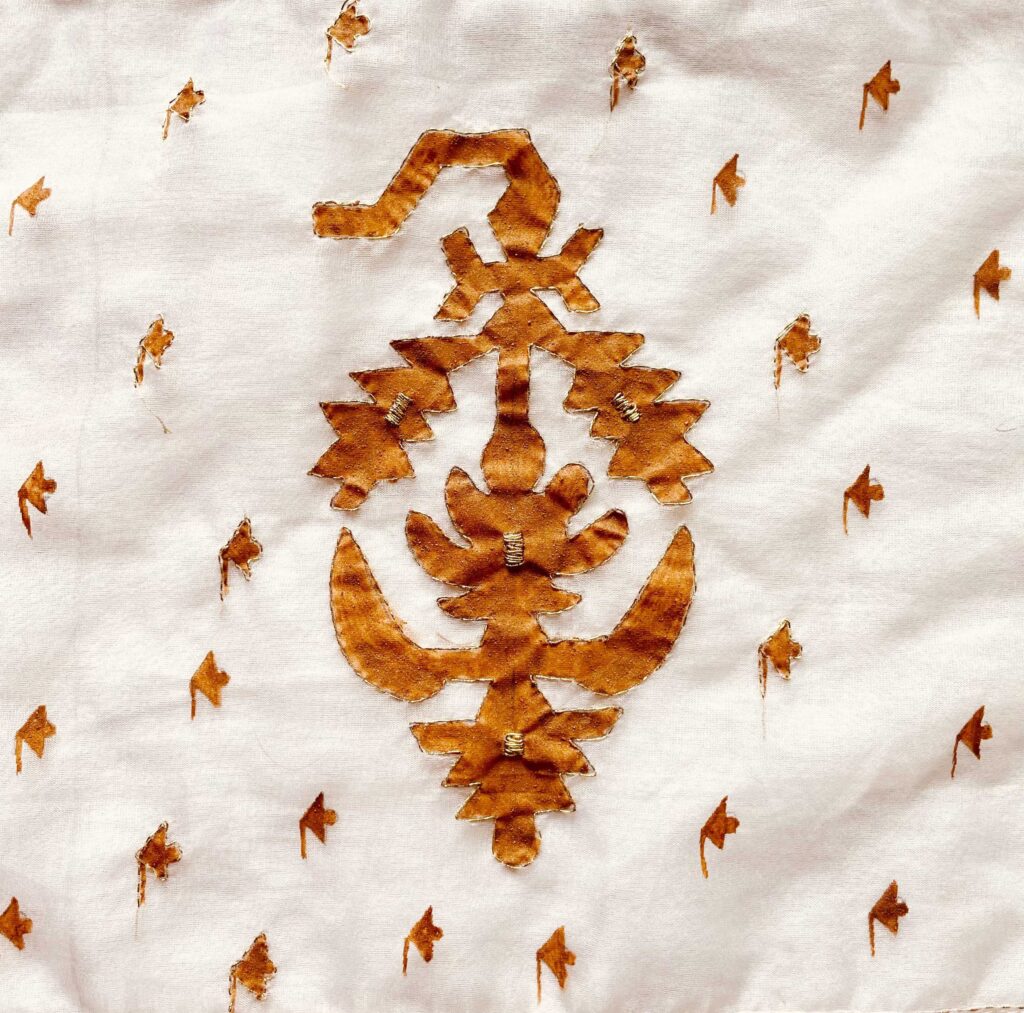
Woven Stories of Jamdani
This textile book explores the cultural heritage of Jamdani, one of Bangladesh’s most celebrated and internationally recognised traditional textiles. Known for its intricate craftsmanship, Jamdani is not merely a garment but a living tradition that carries the knowledge, patience, and stories of weavers who often dedicate months of labour to create a single sari.
The book opens with an introduction to Jamdani and brings together the chants, mnemonic phrases, and rhythmic recitations traditionally used by weavers to remember and guide complex patterns during the weaving process. It presents a range of Jamdani motifs along with their names, revealing the depth of its visual language. These elements reflect both the technical and oral knowledge embedded within the practice, including the songs and recitals that accompany the act of weaving.
Many Jamdani weaving communities are located along the banks of the Shitalakshya River, a site deeply connected to the history of the craft. This relationship is visualised through an embroidered river in blue thread, flowing across the fabric like a continuous current.
The book is created using muslin fabric, referencing the historic link between Jamdani and fine muslin textiles. Clay is used to form texts and patterns, connecting the work to the artist’s ceramic practice and material exploration. The pages are stitched with golden thread, echoing the delicate ornamental quality of Jamdani. Through this work, the artist highlights not only the beauty of the textile but also the often-unseen lives of the weavers, many of whom continue to struggle for fair recognition and sustainable livelihoods while sustaining this remarkable tradition.
The book can be unfolded page by page, but when gently pulled, it expands further—opening into a form that resembles a miniature Jamdani saree, echoing the structure and flow of the textile itself.
Mahadi Masud
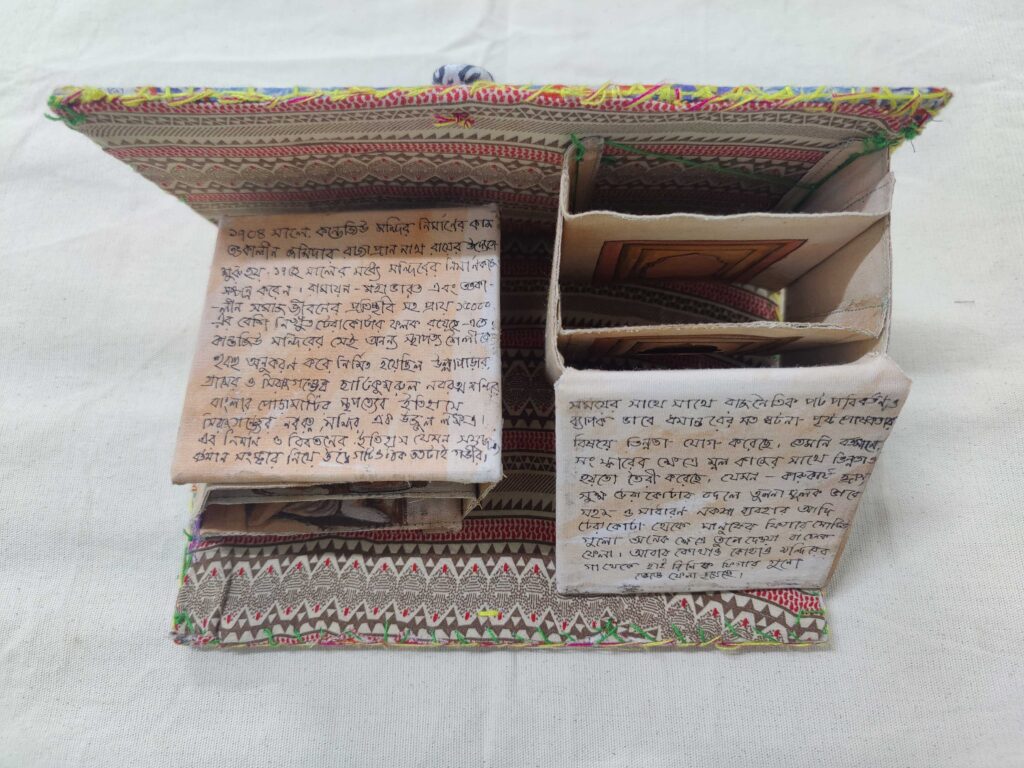
This work engages with the Navaratna Temple of Sirajganj (north-central Bangladesh), exploring both the presence and absence of its terracotta surfaces. The artist reflects on the condition of the temple, where some of the intricate plaques are believed to have been removed or altered over time—possibly due to changing religious contexts. Through this, the work raises a critical question: what happens when a Hindu temple becomes Muslim? It further asks whether these terracotta elements should be understood only through a religious lens, or recognised as a shared cultural heritage that exists beyond religious boundaries. The work evolves into a visual interaction, where layered frames invite the audience to look closely, uncovering and questioning what is visible and what is missing. Through this shifting perspective, viewers are encouraged to investigate the presence and absence of the terracotta surfaces.
In the architectural history of Bengal, the Navaratna temple stands as a remarkable example of design and craftsmanship. It serves as an important testimony to Bengal’s religious architecture, reflecting the artistic traditions and material practices of its time.
Historical accounts suggest that the temple was established in 1704 under the patronage of the zamindar Ratan Narayan Ray, with construction completed around 1752. The structure became known for its exceptional detailing, with more than 15,000 intricately crafted terracotta plaques adorning its surface. Built in the distinctive Navaratna style, the temple is characterised by nine tower domes and elaborate ornamentation.
The architecture incorporates key features of traditional Bengali temple design, including curved cornices, richly decorated terracotta panels, and motifs depicting religious narratives alongside scenes of everyday life. These terracotta surfaces function not only as decoration but also as visual records of social practices, cultural expressions, and symbolic imagery from the period.
Beyond its architectural value, the Navaratna temple holds deep cultural and historical significance. The work suggests that preserving such structures is not only about maintaining physical forms, but also about safeguarding the layered histories, artistic knowledge, and cultural memory embedded within them. When these elements are lost or erased, the visible traces of collective history gradually fade, distancing future generations from their cultural roots.
Mahmuda Siddika
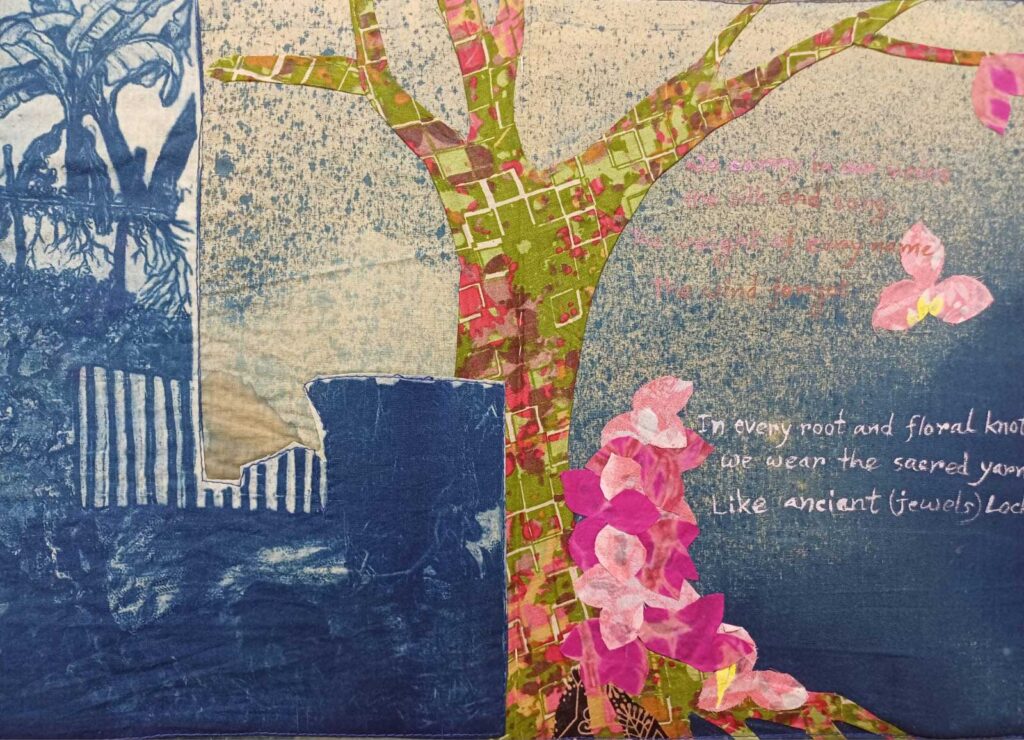
Leaf & Lore
In the heart of decaying ruins,
They stir awake,
An ancient guardian of time and pink shimmering of joy.
Together they wander,
Carries the echoes of laughter,
Like a sacred homecoming,
The walls are crumbling,
But a new form is born.
Step into a labyrinth –
Where every crack speaks,
Every fuchsia petal prays.
Embrace the green silence –
Where the whisper of the past
Finally find their rest.
Marzia Bentee Rahman
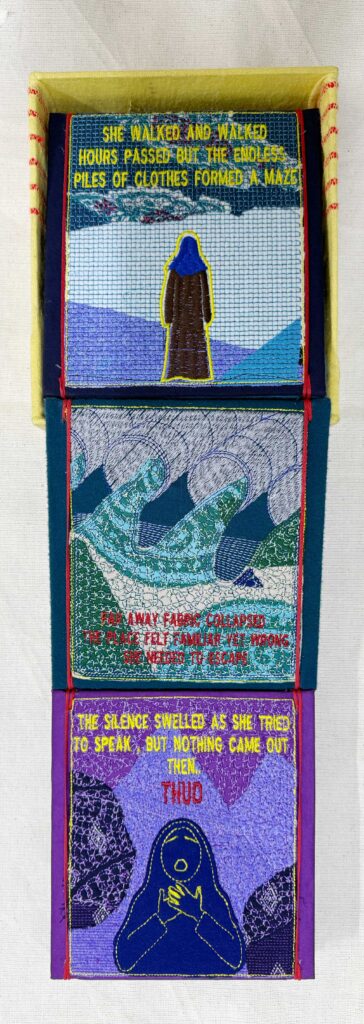
“Stitched Shut” portrays a woman who spent her life sewing clothes for others but never allowed herself the freedom those clothes represented. Society used clothing to regulate morality and behavior, and over time these rules became so deeply internalized that they shaped her identity.
One day she wakes in a strange world with no beginning and no end, only endless piles of clothes stretching as far as she can see. The work that once held value and purpose now lies meaningless, reduced to waste. Careless consumerism transforms the tailor’s careful craft into trash.
As she searches for a way out, memories of her life return. She begins to question the rules she followed so faithfully. Yet even after recognizing the harm they caused, she cannot bring herself to break them. Obedience has become an identity. Even without watchers, she continues to perform the role she has always known.
“Stitched Shut” reflects how the woman who spent her life stitching clothes also had her voice, freedom, and identity quietly sewn closed by the very rules she lived under.
Nazm Anwr
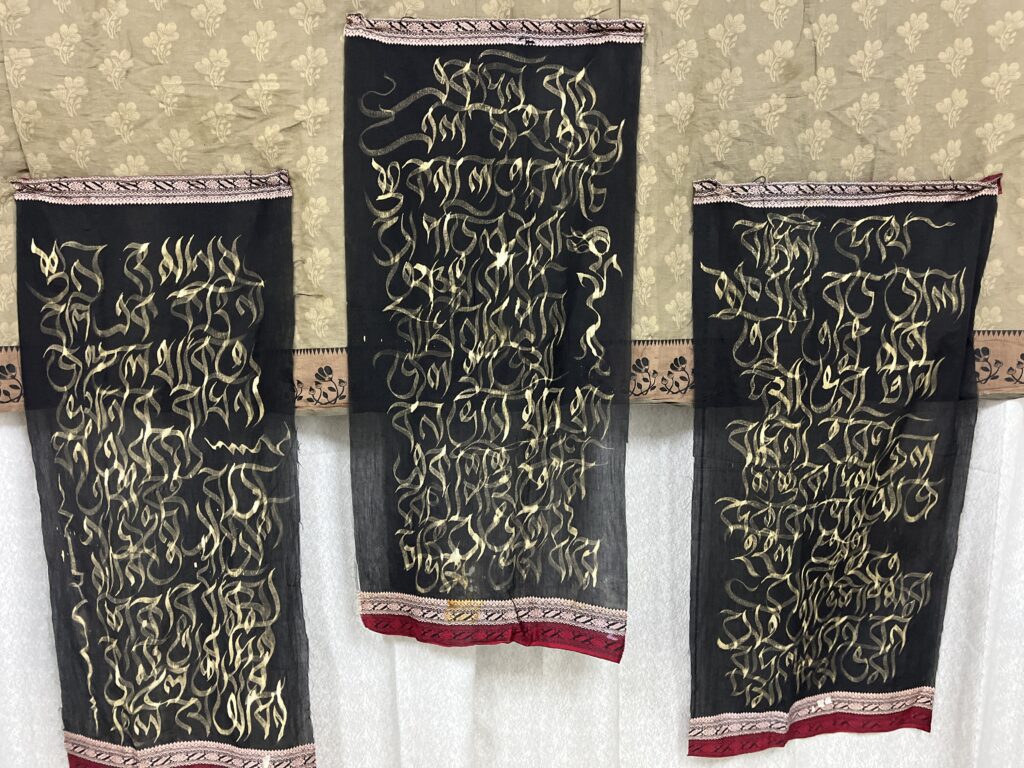
অরন্যের দয়া
শুন হে মানুষ কহি এক কাহিনী
জঙ্গলে থাকিত এক ভয়ানক বাঘিনী
ঘন অরণ্যে তাহারই বাস
গর্জনে সকলে হইতো দাস
শিকার ধরিয়া কাটে তার দিন
জঙ্গল তাহার যে ছিল অধীন
একদিন বনে এল মহা ক্ষরা
শুকনা লতার প্যাঁচে সে পড়িল ধরা
তৃষ্ণায় কাঁপে বাঘিনীর প্রাণ
জল খুঁজিয়া বনভূমি খান খান
এক শিশু হরিণ দাঁড়ায়েছে তীরে
রোগা পায়ে চাহে জলে ভয়ে ভয়ে ধীরে
বাঘিনী দেখে ক্ষুধার বড় জ্বালা
তবু তার মন আজ দয়া ভরা ঢালা
বাঘিনী হরিণ শিশুকে দিল জল
দেখে বনভূমি আজ হইলো তরল
সেদিন হইতে সেই অভিশাপ ক্ষরা
বাদলে প্লাবন বন দয়া দিয়ে ভরা
Nazmul Hossen Nayon
Inheritance of Living
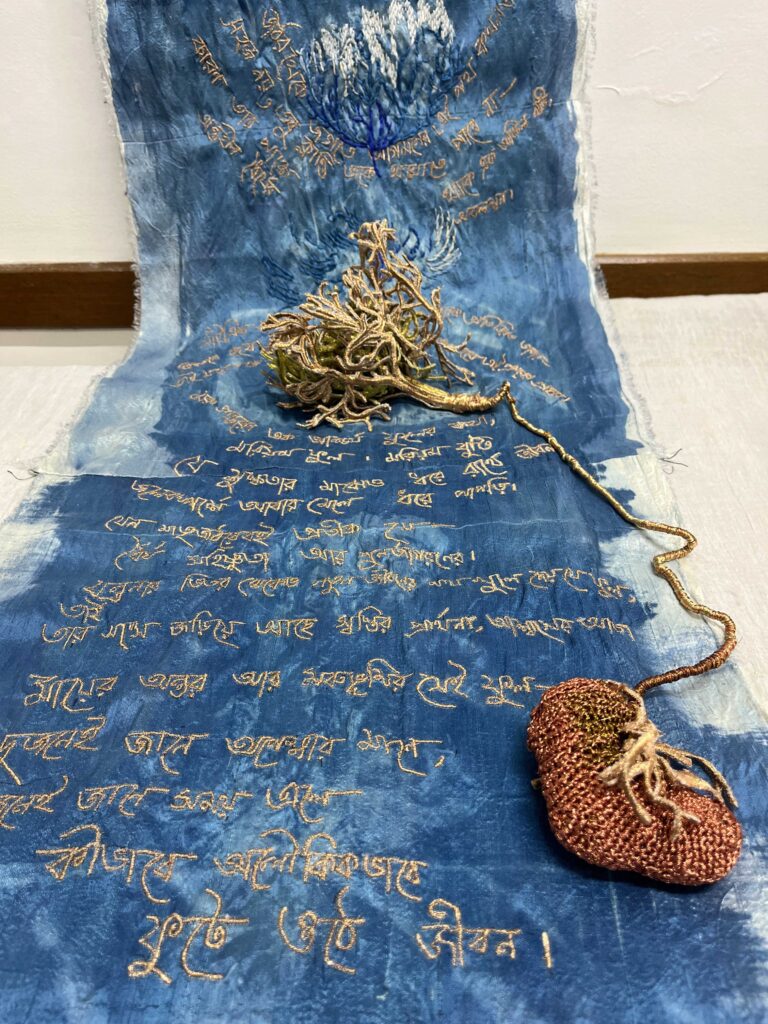
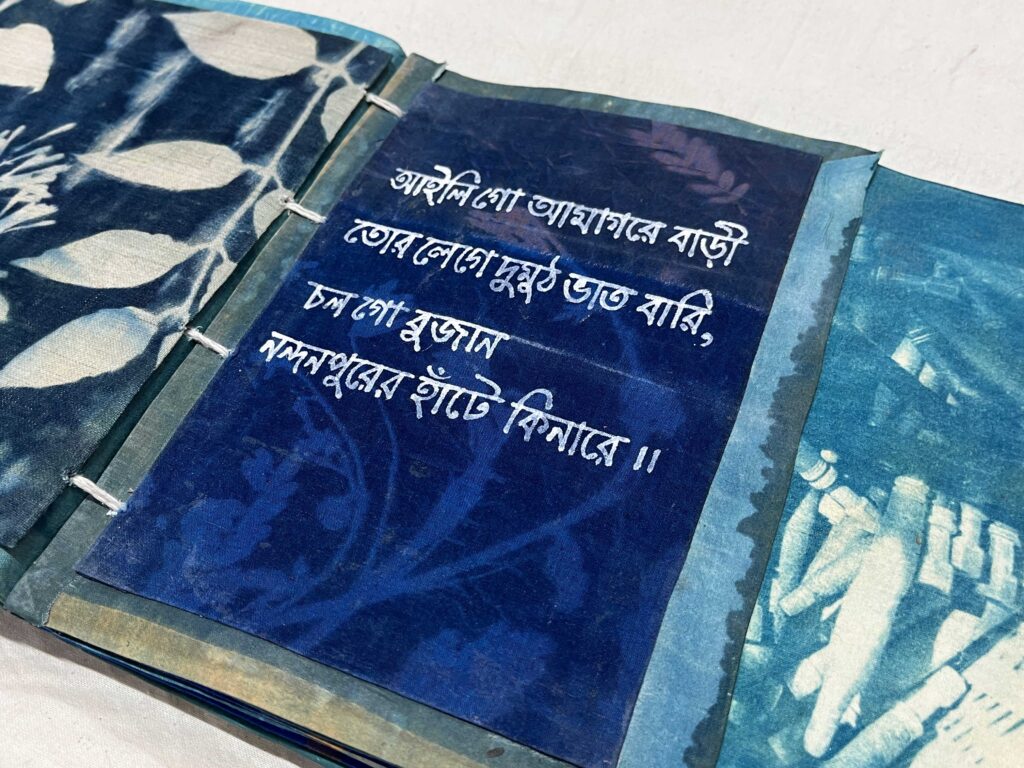
It is a book that reflects on the relationships between land, labour, memory, and cultural continuity within the Bengal delta. Drawing from agrarian and weaving-based social life, the work engages with vernacular cosmologies and lived rural practices.
At its centre is an exchange between a peasant woman and a weaver’s wife—grain for cloth—reflecting reciprocal economies and women’s often-unseen labour. Their conversation follows the rhythmic, poetic modes of expression common among village women, forming a key visual and narrative motif.
Through cyanotype, anthotype, and hand-writing, the work unfolds as a layered visual archive where text and image intertwine with lived experience and inherited memory.
Nodi Judith Gomes
The Wanderer
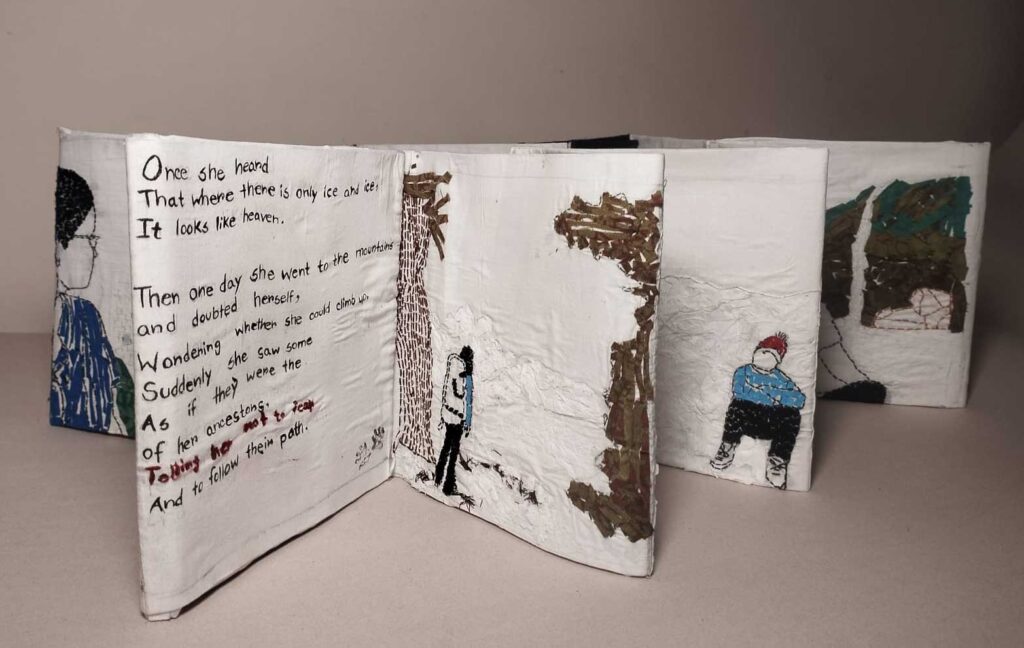
This story follows a girl who once knew very little about the vast beauty and diversity of the world. As she begins exploring new places, cities, jungles, waterfalls, and snow-covered mountains, each journey opens her eyes to new cultures, landscapes, and ways of life. Gradually, these experiences shape her thoughts and emotions, helping her see the world from a different perspective. What begins as a simple exploration slowly turns into a journey of self-discovery, transforming her into a more aware, thoughtful, and humble human being.
Nur A Alaa Siddique
Archive of a Shadowless Park
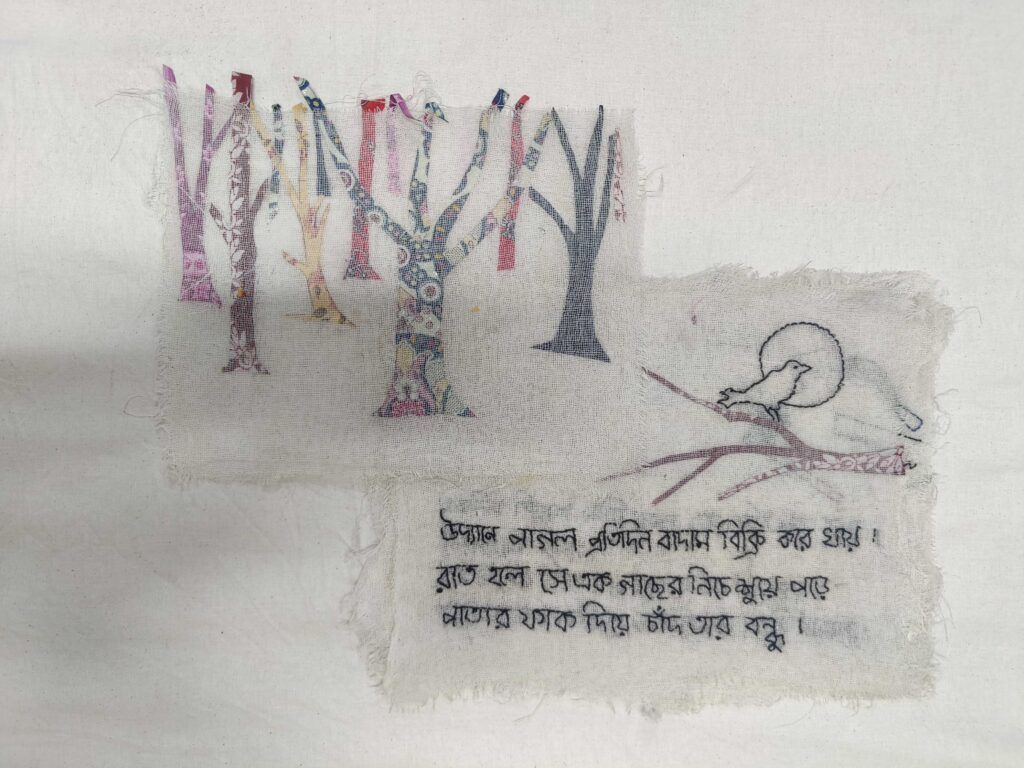
Many parks in the city of Dhaka are undergoing rapid transformation under the pressures of urbanisation. In the name of development, new structures, paved pathways, and various infrastructures are being introduced, resulting in the continuous removal of old and rare species of trees. As a consequence, the natural environment, shade, and biodiversity of these green spaces are gradually diminishing.
This work attempts to preserve the memory of those lost trees, forming an archive that records their presence—where traces of their existence remain even in the absence of their shade.
The narrative of the book is shaped through the perspective of a homeless individual who inhabits the park and becomes a quiet observer of this ongoing loss. Though often dismissed as mad or insignificant, he carefully collects the fallen leaves of the vanished trees and remembers their names, holding them as an archive within his own memory. Through this figure, the work reflects on overlooked forms of care, witnessing, and remembrance, suggesting that even in displacement and marginality, acts of preservation and connection to nature persist.
Papia Sarwar
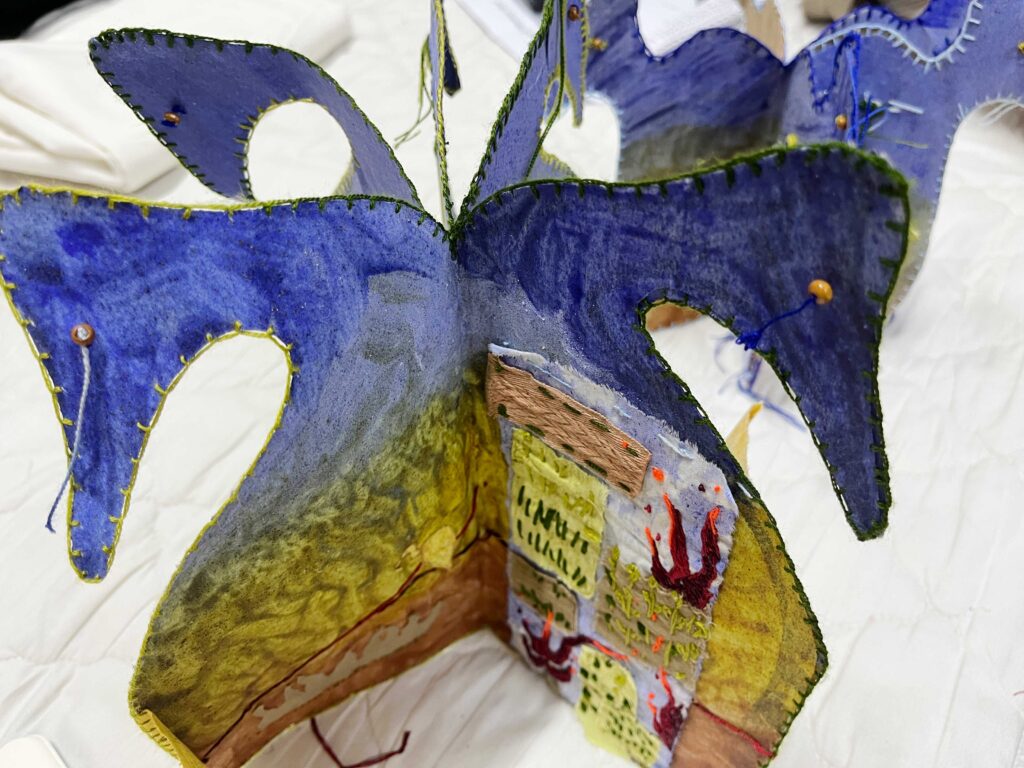
Quiet dialogues
This handmade book emerges from a quiet dialogue between the artist and her mother. Inspired by her mother’s words about a forest burning with sorrow, the work reflects on how women’s grief transforms into resilience across generations.
Using natural pigments and fragments of both her mother’s saree and her own, the pages weave together memory, inheritance, and the intimate language shared between two lives.
Rafia Mahjabeen and Rituparna Saha
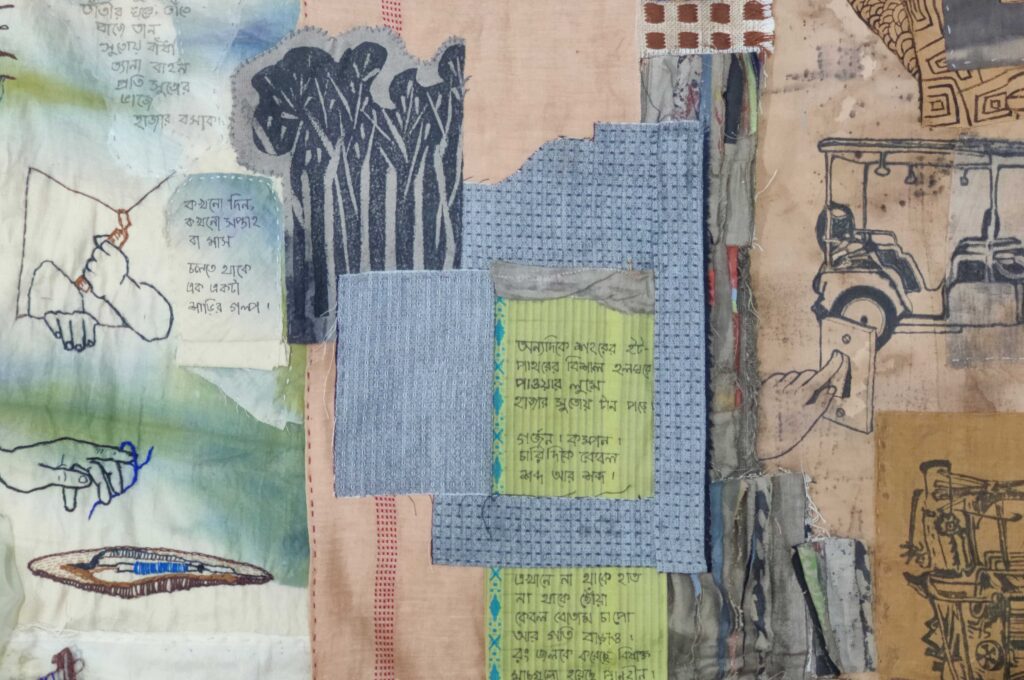
Tati
Tangail sari is one of the most enduring heritage garments of Bangladesh. For generations, women across the country have incorporated it into their daily lives, making it not only a piece of clothing but also a living cultural narrative. Among the many regional traditions, the Tangail sari and handloom weaving stand as one of Bangladesh’s most significant textile heritages. The handloom sari industry in Tangail developed largely under the guidance of the Basak community. Weavers who migrated from Dhamrai and Chauhatta later became recognized as pioneers of this craft in Tangail.
In the early nineteenth century, simple saris were woven using vital and dobby borders through handloom. Gradually, with the introduction of dobby techniques, decorated borders—later known as Nakshi par—began to emerge. Subsequently, the pit loom enabled the addition of hand buti motifs, enriching the visual language of Tangail textiles.
By the mid-nineteenth century, the arrival of the Jacquard loom further transformed the design possibilities in Tangail. Inspired by jacquard designs, more intricate narrative patterns began to appear. The hand buti sari remains one of Tangail’s most distinctive traditions. Upon close observation, its weaving process reveals strong technical and aesthetic parallels with Jamdani weaving. Historically, natural dyes were used for coloring the saris, and as a result, nearby water bodies remained clean and ecologically balanced. The Dhaleshwari River was once clear and free from pollution.
Completely handwoven, each sari demands time, patience, and highly specialized skill. Without the expertise of master weavers, producing these textiles is nearly impossible. However, this heritage is now under severe threat. Neglect, the easy availability of industrial products, and the rapid expansion of power looms have caused a steady decline in the number of skilled weavers. Many artisans are abandoning their ancestral profession in search of financial survival. A significant number have shifted to driving battery-powered rickshaws due to economic hardship.
Power loom saris dominate the market because they are cheaper and require minimal human labor—often completed at the press of a button. As a result, traditional weavers are increasingly forced to seek alternative livelihoods. A handcrafted heritage is slowly approaching extinction due to the lack of proper patronage and systemic support.
Industrialization and the spread of power looms have not only impacted the weaving community but have also severely damaged the local ecosystem. The Dhaleshwari River is now nearly toxic; its fish are often considered unsafe to consume, and the water carries a persistent kerosene-like odor. Industrial waste, plastic pollution, and chemical dyes continue to contaminate the river at an alarming rate.
In this context, both the handloom tradition and the weaver’s livelihood stand at a critical crossroads. Our inquiry emerges from this fragile intersection of craft, ecology, and survival. Through our work, we seek to foreground the slow, labor-intensive beauty of handwoven textiles while simultaneously questioning the socio-economic and environmental costs of industrial growth . The future of this heritage remains uncertain, and it is within this uncertainty that our practice attempts to document, mourn, and reimagine the fate of Tangail’s weaving legacy.
Rokeya Sultana (with Tiufikul Islam)
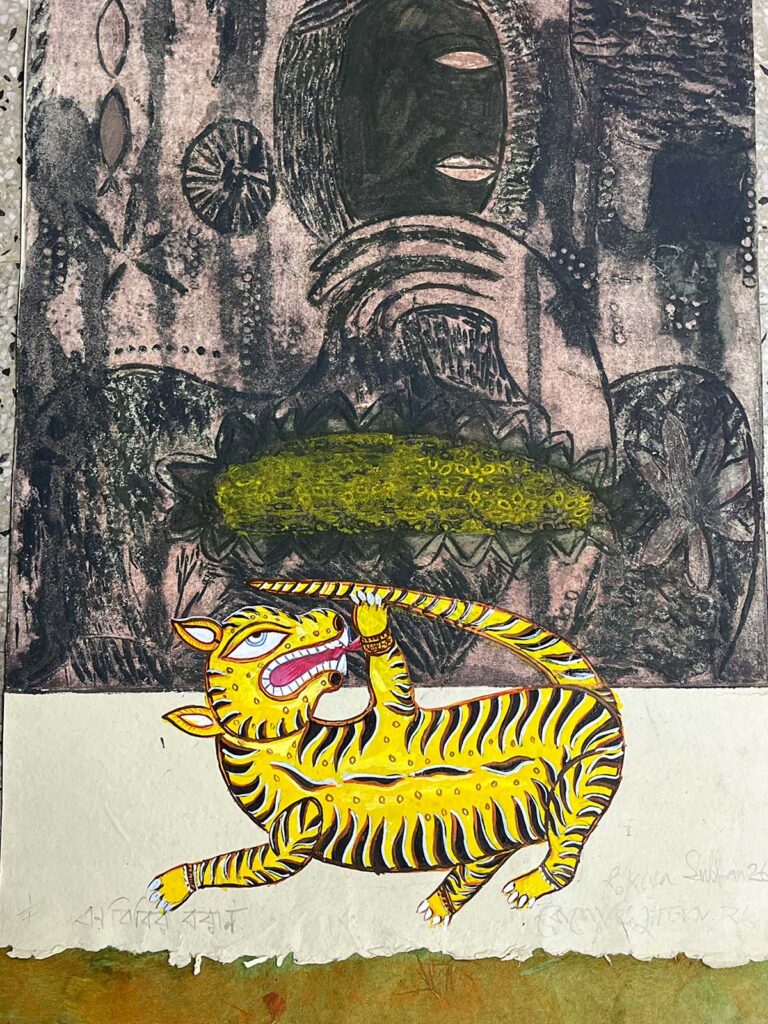
Bonbibi
This work presents a contemporary interpretation of Bonbibi through a mixed-media approach, combining experimental printmaking techniques such as collagraph with fabric collage and painted interventions. The artist builds layered surfaces where printed impressions are reworked with paint, creating textured compositions that evoke both material depth and narrative presence. Bonbibi is depicted as a powerful yet graceful feminine figure, reimagined through the artist’s distinctive style of figure drawing. The tactile layers and visual language emphasise both strength and tenderness, reflecting her dual role as protector and nurturer. While the narrative framework of the story was developed in collaboration with Toufiqul Emon, each artist translates the myth through their own individual visual language.
The myth of Bonbibi is deeply rooted in the lives of the people of the Sundarbans (south-west Bangladesh). According to legend, Bonbibi is the guardian spirit of the forest who protects poor villagers, honey collectors, and woodcutters from danger, especially from the demon king Dakkhin Rai. Those who enter the forest seek her blessings for safety from tigers and other threats. The story carries values of justice, coexistence between humans and nature, and a deep respect for the forest as a shared and sacred space.
Tahmima Hafiz Liza
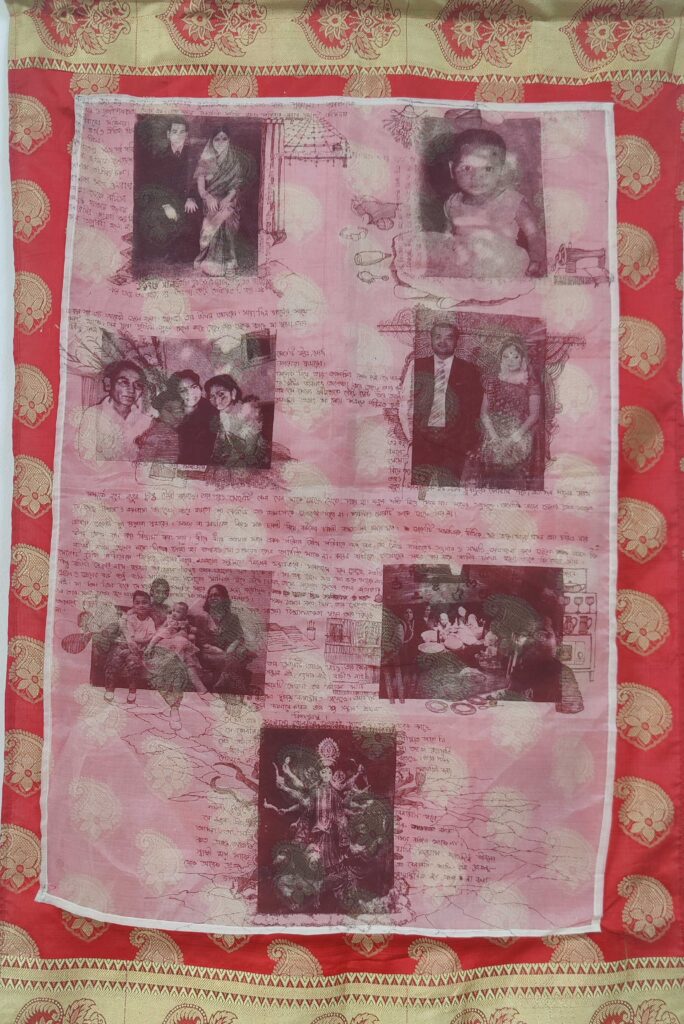
Benarasi
This work takes the form of a scroll-like book, where a Benarasi saree becomes the base material of the narrative. Layered over it is a transparent muslin surface carrying visual and textual fragments, reflecting lived realities, social norms, and archival memories. Through these materials, the artist creates a space where visibility and obscurity intersect—allowing memory, tradition, and identity to unfold gradually.
For generations, Benarasi sarees have been a symbol of beauty, aspiration, and celebration in South Asian culture. Even today, their emotional significance remains deeply rooted, forming the conceptual foundation of this work.
The narrative unfolds within a middle-class family in Bangladesh during the 1970s, where a red Benarasi saree holds profound emotional and cultural meaning. It follows the lives of two women across generations—a mother and a daughter—whose experiences reveal the tensions, expectations, and inherited values surrounding womanhood. Through their relationship, the story explores how social norms, gender roles, and cultural traditions shape personal desires and identities, and how these inherited expectations can both connect and distance individuals over time.
Within the everyday lives of these women, the Benarasi saree becomes more than a garment; it transforms into a symbol of memory, aspiration, and the pressures of tradition. The narrative reflects subtle negotiations between personal agency and social structures, highlighting how time creates gaps between generations and invites reflection on enduring social, economic, and gendered realities.
Toufikul Islam
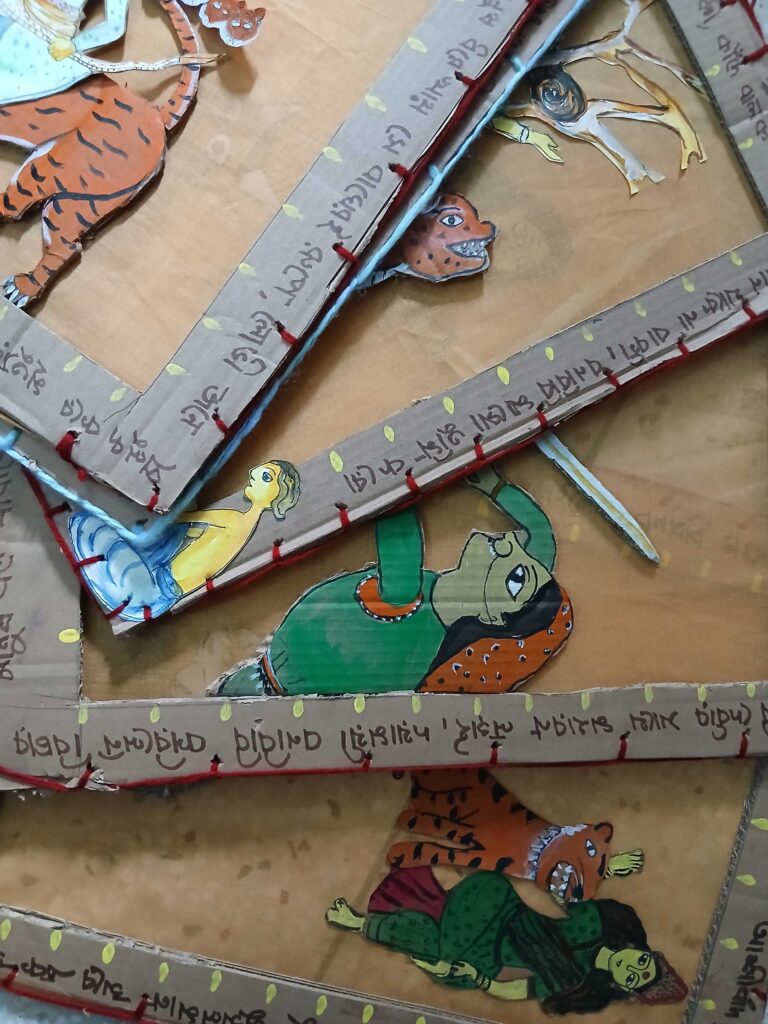
The myth of Bonbibi is very popular among the people of the Sundarbans. According to the legend, Bonbibi is the guardian spirit of the forest who protects poor villagers, honey collectors, and woodcutters from dangers, especially from the demon king Dakkhin Rai. People who enter the forest pray to Bonbibi for safety and protection from tigers and other threats. The story teaches values of justice, harmony between humans and nature, and respect for the forest.
The conceptual collaboration of this work was done with Rokeya Sultana
Venessa Kaiser
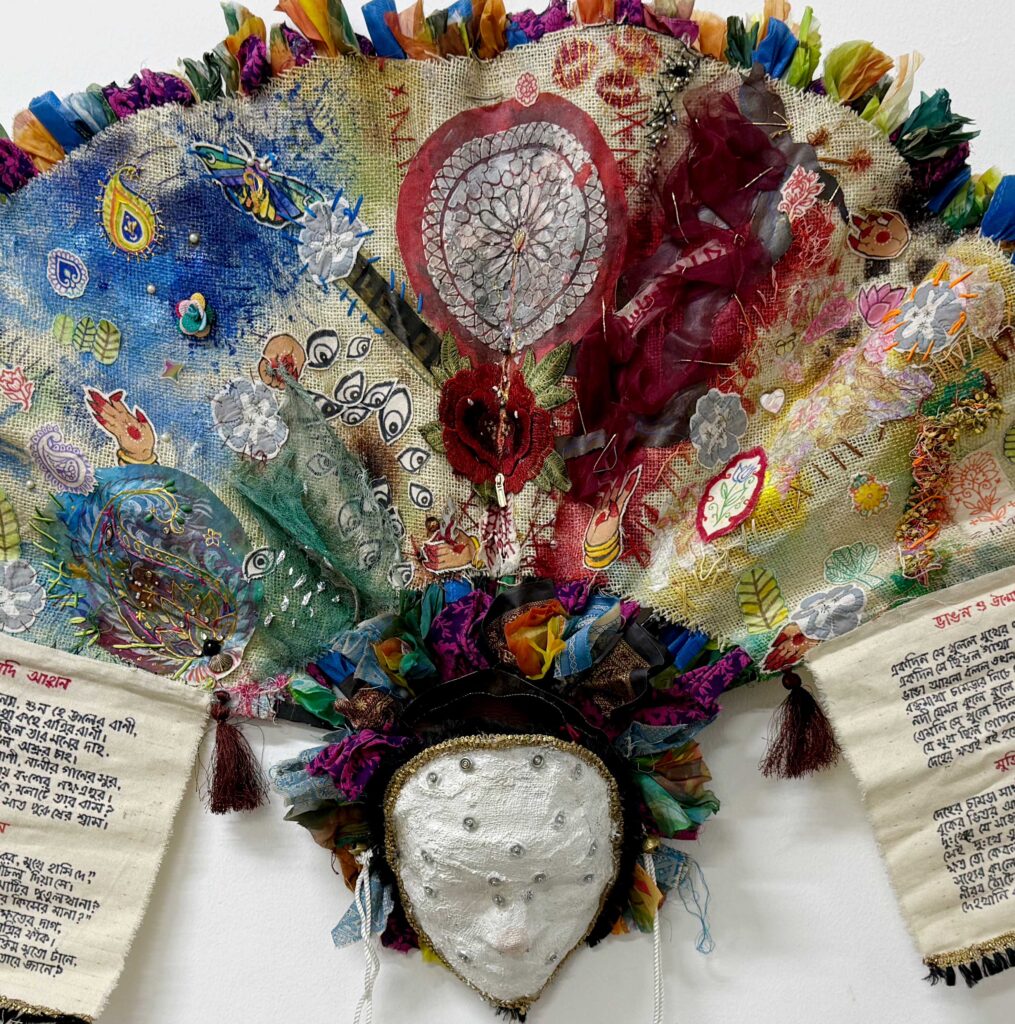
“চেহারা ঠিক কর : Persona In Pieces”
This work is developed around the ideas of “Skin as Archive” and “Inherited Threads,” where the artist considers the body as a living archive—one that carries memory, inheritance, and stories often held in silence.
At its centre is a mask inspired by the visual language of Bengali folk performance traditions such as Gambhira, Gomira, and Chau (regional performance forms from eastern India and Bangladesh known for expressive masks and ritual storytelling). The artist reinterprets this mask as an interactive structure, where different facial features can be attached, removed, or altered. This shifting face responds to a familiar social instruction often heard while growing up—“চেহারা ঠিক কর” (“fix your face” or “compose yourself”)—questioning the expectation that emotions, pain, or truth must be concealed behind socially acceptable expressions.
Behind the mask unfolds a fan-like, expandable structure. As it opens, each fold reveals layered textile collages and embroidery inspired by the Kanchanmala narrative from Purbo Bongo Gitika (a collection of traditional folk ballads from eastern Bengal). Through these layers, the work traces themes of maternal memory, silence, endurance, and transformation.
Through this piece, the artist reimagines the concept of the book—where the body becomes the page, stitching becomes the text, and the story unfolds through folds, touch, and interaction.
Sorry, the comment form is closed at this time.